Wednesday, April 23, 2014

Bacterium Toothbrush

              How clean would you consider your mouth to be? Most people who practice good oral hygiene by brushing, flossing and using mouth wash would never think that their mouths could be a home to over 700 different kinds of bacterial species. Streptococcus mutans is the main cavity-causing bacterium. S. mutans adheres themselves to the surface of the enamel and produce a biofilm (also known as plaque). They convert the sugars on the enamel and convert it into lactic acid that eats away at the tooth and causes cavities. Scientists discovered in 2009 that Streptococcus salivarius, a bacterium found on the tongue and other parts in the mouth lessens the buildup of biofilms caused by S. mutans. The article explained that researchers wanted to know what substance in S. salivarius allows it deter the growth of biotfilms. Hidenobu Senpuku and his fellow colleagues from the National Institute of Infectious Diseases found that S. salivarius produced Fru A, an enzyme that break down complex sugars. The author lets you know that just because S. salivarius helps fight against S. mutans biofilms, doesn’t mean that you can consume all the sugar you want. I liked that the author ended the article by saying that the findings can possibly bring the development of better toothpastes. It sounds like it would be quite a challenge because how will get the bacteria to stay alive in the packaging or even after the toothpaste has been opened. The author gave many interesting facts and made it easily understandable.

http://news.sciencemag.org/2011/04/bacterium-acts-toothbrush

https://blogger.googleusercontent.com/img/b/R29vZ2xl/AVvXsEjaqiF3nLlg8NHWJTrvXxNFdz5UMTLKxD_S5p4D0HUjLVmexB9hSUT6waLSggpQaZjA7154-3PmkQkrVbEClo_9tiNbkznDuQiAYV-VQQwXCPSIABX86-CLEC5-tF_NvrJxoL4fxboTBQ0/s1600/B2360114-Streptococcus_salivarius_bacteria-SPL.jpg

Wednesday, April 16, 2014

The Meningitis Forecast Is...

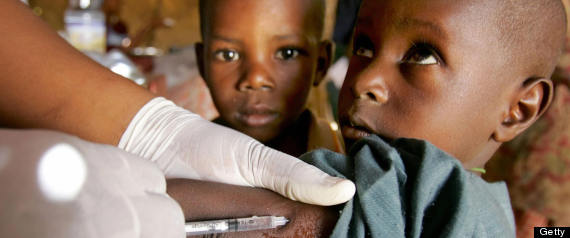
                If are someone that keeps themselves updated about global issues then you probably know that the infection rate caused by viruses, bacteria, fungi and parasites is quite high. New research is providing a possible solution or a way to predict meningitis outbreaks in Sub-Saharan Africa. A research project looked at the link between, dusty and windy weather conditions and outbreaks of disease. Unfortunately, that’s about as descriptive as the author was when they explained how the link between weather conditions and meningitis outbreaks would help predict the location, size and duration of epidemics like the author mentioned in the article. The article clearly stated what the researchers intended to do with the findings. The author quoted the lead researcher, Dr. Madeleine Thomson who said “The long term aim is to develop a forecasting system which can be used by health organizations to prevent and control epidemics." I like the fact that the purpose of the article was clearly stated because it’s straight forward and easy to understand. The research can lead to an early season warning/alert system that can provide strategies, health teams, and vaccine shots ready. The author mentioned at the end of the article that dry and dusty winds were accepted as a contributor to epidemic outbreaks. A question I have is that if that’s the case, then where are the meningitis-causing bacteria coming from?

 http://www.medicalnewstoday.com/categories/infectious_diseases/
http://i.huffpost.com/gen/1178335/thumbs/r-MENINGITIS-VACCINE-BILL-GATES-large570.jpg?6

Wednesday, April 9, 2014


            If you are familiar to the issue of air pollution then you probably know that Beijing, China ranks in as one of the most polluted cities in the world and the reason that is true is because their government has done nothing to tackle the problem. It is commonly known that the smog causes health issues among Chinese citizens which is why many wear a type of mask that somewhat protects them from breathing all the toxic air but a recent study shows that microbes may play a part in all these health issues. Chinese researchers found traces of more than 1,300 species in Beijing’s most polluted air. The researchers took measurements over a five day period of severe smog but a question I had was, “how did they measure the severity of the smog?” Did they take measurements while some industrial companies were releasing their harmful toxins into the atmosphere? That information might have helped the reader get confirmation as to why the volume of microbes was so high. 

            Out of 1,315 species found, most were bacteria but the researchers also found viruses and fungi in smaller numbers. A microbiologist from the University of Colorado Boulder named Norman Pace said “I see no microbes of particular public health concern,” Pace said, adding that the smog itself is what is deadly.” I would disagree because some of the microbes found are known to cause allergies and respiratory diseases. Microbes might not be the main cause to all the health issues that people experience but I would say that they do play a role.

 http://articles.latimes.com/2014/feb/04/science/la-sci-sn-beijing-smog-microbes-air-pollution-china-20140203

http://www.bloomberg.com/news/2014-02-26/xi-calls-pollution-beijing-s-biggest-challenge-as-smog-eases.html

http://bettercitiesnow.com/urban-issues/health-and-wealth-why-china-needs-cleaner-cities


Wednesday, April 2, 2014

Did Microbes Kill The Dinosaurs?

There are many theories as to what caused the extinction of 90 percent of all species on earth about 252 million years ago. Some say it was volcanoes others argue that it was a giant astroid. New research conducted at MIT suggests that microbes were responsible for the mass extinction. The theory states that the extinction was caused by a microbe that produced methane called Methanosarcina. The article states that methane spread into the oceans and then the atmosphere, rapidly influencing climate change. The theory finally suggests that volcanic eruptions aldo could have been a factor. The author employed good use of ethos by quoting work from MIT researchers. I found this article to be interesting but I would have liked if the article had talked more about Methanosarcina which was said had caused the mass extinction.

http%3a%2f%2fwww.universityherald.com%2farticles%2f8526%2f20140401%2fmit-researchers-believe-microbes-caused-the-earths-mass-extinction-252-million-years-ago.htm