Wednesday, April 23, 2014

Bacterium Toothbrush

              How clean would you consider your mouth to be? Most people who practice good oral hygiene by brushing, flossing and using mouth wash would never think that their mouths could be a home to over 700 different kinds of bacterial species. Streptococcus mutans is the main cavity-causing bacterium. S. mutans adheres themselves to the surface of the enamel and produce a biofilm (also known as plaque). They convert the sugars on the enamel and convert it into lactic acid that eats away at the tooth and causes cavities. Scientists discovered in 2009 that Streptococcus salivarius, a bacterium found on the tongue and other parts in the mouth lessens the buildup of biofilms caused by S. mutans. The article explained that researchers wanted to know what substance in S. salivarius allows it deter the growth of biotfilms. Hidenobu Senpuku and his fellow colleagues from the National Institute of Infectious Diseases found that S. salivarius produced Fru A, an enzyme that break down complex sugars. The author lets you know that just because S. salivarius helps fight against S. mutans biofilms, doesn’t mean that you can consume all the sugar you want. I liked that the author ended the article by saying that the findings can possibly bring the development of better toothpastes. It sounds like it would be quite a challenge because how will get the bacteria to stay alive in the packaging or even after the toothpaste has been opened. The author gave many interesting facts and made it easily understandable.

http://news.sciencemag.org/2011/04/bacterium-acts-toothbrush

https://blogger.googleusercontent.com/img/b/R29vZ2xl/AVvXsEjaqiF3nLlg8NHWJTrvXxNFdz5UMTLKxD_S5p4D0HUjLVmexB9hSUT6waLSggpQaZjA7154-3PmkQkrVbEClo_9tiNbkznDuQiAYV-VQQwXCPSIABX86-CLEC5-tF_NvrJxoL4fxboTBQ0/s1600/B2360114-Streptococcus_salivarius_bacteria-SPL.jpg

Wednesday, April 16, 2014

The Meningitis Forecast Is...

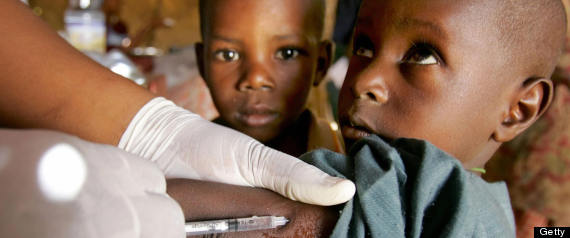
                If are someone that keeps themselves updated about global issues then you probably know that the infection rate caused by viruses, bacteria, fungi and parasites is quite high. New research is providing a possible solution or a way to predict meningitis outbreaks in Sub-Saharan Africa. A research project looked at the link between, dusty and windy weather conditions and outbreaks of disease. Unfortunately, that’s about as descriptive as the author was when they explained how the link between weather conditions and meningitis outbreaks would help predict the location, size and duration of epidemics like the author mentioned in the article. The article clearly stated what the researchers intended to do with the findings. The author quoted the lead researcher, Dr. Madeleine Thomson who said “The long term aim is to develop a forecasting system which can be used by health organizations to prevent and control epidemics." I like the fact that the purpose of the article was clearly stated because it’s straight forward and easy to understand. The research can lead to an early season warning/alert system that can provide strategies, health teams, and vaccine shots ready. The author mentioned at the end of the article that dry and dusty winds were accepted as a contributor to epidemic outbreaks. A question I have is that if that’s the case, then where are the meningitis-causing bacteria coming from?

 http://www.medicalnewstoday.com/categories/infectious_diseases/
http://i.huffpost.com/gen/1178335/thumbs/r-MENINGITIS-VACCINE-BILL-GATES-large570.jpg?6

Wednesday, April 9, 2014


            If you are familiar to the issue of air pollution then you probably know that Beijing, China ranks in as one of the most polluted cities in the world and the reason that is true is because their government has done nothing to tackle the problem. It is commonly known that the smog causes health issues among Chinese citizens which is why many wear a type of mask that somewhat protects them from breathing all the toxic air but a recent study shows that microbes may play a part in all these health issues. Chinese researchers found traces of more than 1,300 species in Beijing’s most polluted air. The researchers took measurements over a five day period of severe smog but a question I had was, “how did they measure the severity of the smog?” Did they take measurements while some industrial companies were releasing their harmful toxins into the atmosphere? That information might have helped the reader get confirmation as to why the volume of microbes was so high. 

            Out of 1,315 species found, most were bacteria but the researchers also found viruses and fungi in smaller numbers. A microbiologist from the University of Colorado Boulder named Norman Pace said “I see no microbes of particular public health concern,” Pace said, adding that the smog itself is what is deadly.” I would disagree because some of the microbes found are known to cause allergies and respiratory diseases. Microbes might not be the main cause to all the health issues that people experience but I would say that they do play a role.

 http://articles.latimes.com/2014/feb/04/science/la-sci-sn-beijing-smog-microbes-air-pollution-china-20140203

http://www.bloomberg.com/news/2014-02-26/xi-calls-pollution-beijing-s-biggest-challenge-as-smog-eases.html

http://bettercitiesnow.com/urban-issues/health-and-wealth-why-china-needs-cleaner-cities


Wednesday, April 2, 2014

Did Microbes Kill The Dinosaurs?

There are many theories as to what caused the extinction of 90 percent of all species on earth about 252 million years ago. Some say it was volcanoes others argue that it was a giant astroid. New research conducted at MIT suggests that microbes were responsible for the mass extinction. The theory states that the extinction was caused by a microbe that produced methane called Methanosarcina. The article states that methane spread into the oceans and then the atmosphere, rapidly influencing climate change. The theory finally suggests that volcanic eruptions aldo could have been a factor. The author employed good use of ethos by quoting work from MIT researchers. I found this article to be interesting but I would have liked if the article had talked more about Methanosarcina which was said had caused the mass extinction.

http%3a%2f%2fwww.universityherald.com%2farticles%2f8526%2f20140401%2fmit-researchers-believe-microbes-caused-the-earths-mass-extinction-252-million-years-ago.htm

Wednesday, March 26, 2014

Food Danger


Whenever companies produce and distribute food products like raw milk and soft cheeses, smoked fish, raw meat and ready-to-eat products, it is extremely important that the food is produced and distributed in a hygienic environment because we are well aware about the food-borne illnesses and dangerous pathogens that someone can contract if they consume contaminated food. The article I read focused on Listeria outbreaks in Austria. Listeria, the rod-shaped bacterium isn’t really a threat to human health but one particular species called Listeria monocytogenes has the potential of causing dangerous diseases like meningitis and septicaemia, especially among infants and the elderly due to their weak immune systems. The use of pathos was evident in this article because it gave statistical information that can cause someone to feel empathy, sad, or even concerned about their own well-being. For instance, the article stated “…from June 2009 to January 2010 was attributed to one L. monocytogenes strain very effective at infecting epithelial cells of the intestine and liver cells…caused 14 cases resulting in 5 deaths.” I personally was blown away from the fact that 5 out of the 14 people that were infected died. That means 36% of people who were reported to have Listeriosis within that time frame died. Another I found shocking was that Listeriosis can cause a miscarriage or stillbirth among pregnant women. This also plays to the author’s use of pathos because it can bring strong emotions to mothers. This article caught my attention because I remembered that learned about Listeria in culinary arts, so it was nice to refresh my memory about the danger of Listeriosis.

http://www.sciencedaily.com/releases/2014/03/140321112256.htm 

http://blogs.discovery.com/.a/6a00d8341bf67c53ef015392109c15970b-pi


Wednesday, March 12, 2014

Injection Infection!


In today’s world, cosmetic surgeries and procedures that performed to remove aging marks or give luscious set of lips is all too common The American Society for Aesthetic Plastic Surgery (ASAPS) state that filler procedures are the second most popular non-surgical cosmetic procedure in the US. This made me wonder what the number one cosmetic procedure was and if it also results in bacterial infections like filler injections do.  Another common thing that goes in hand is the bacterial infections that result from these treatments. According to the article I read, researchers estimate 1:100 and 1:1000 bacterial infections result from gel filled injection procedures depending on the type of filler that was used. In some cases, people have even been left with permanently disfigured faces because the infections became too difficult to fight off. Researcher stated that it can only take about 10 bacteria to cause horrible lesion and create a tough biofilm which makes it almost impossible to treat with antibiotics. One thing that I would have liked to know which the article didn’t mention was the name of the specie(s) that causes that those infections, just for curiosity. I felt like the author was passively criticizing cosmetic practitioners only because they repeated that fact that practitioners believed that infections were caused by auto-immune or allergic reactions to the gel injected. The article also stated that practitioners refused to believe that infections were caused by bacteria even after research proved it. The good news is that infections can be avoided if by injecting prophylactic antibiotics with the gel filler at the same time. So just a heads up, the next time you’re thinking about getting a facial cosmetic procedure, make sure they use those antibiotics!
http://www.dermalfiller.com/wp-content/uploads/2011/02/benefits-dermal-fillers.jpg

http://i.dailymail.co.uk/i/pix/2014/01/16/article-2540497-1AB5AC9E00000578-486_634x471.jpg


Wednesday, March 5, 2014

You Bettter Clean That Stethoscope!


             The next time you go see doc, you might want to make sure that their stethoscopes are clean because this going to make you uneasy the next time to a checkup and see those things around their neck. A stethoscope is probably one of the most common and regularly used tools by physicians. You’d like to think that a stethoscope would be sterile when a doctor uses it on you since they’re used so often but that tool actually has the potential to spread germs from patient to patient and the article I read explains why. The diaphragm (the round piece at the end of the rubber tube that is placed on the patient’s body) can build with antibiotic-resistant bacteria or “Superbugs.” Even potentially deadly MRSA (methicillin-resistant Staphylococcus aureus) can be found on stethoscopes. The article even mentioned that doctors should change their usual attire of a white coat and a neck tie because those articles of clothing can become contaminated but cannot be washed off easily between patients. The article did not suggest as to what type of clothing physicians might consider switching to, in order to have a safety environment for patients.

            Through a study that was conducted on 71 patients who were examined with sterile gloves and a sterile stethoscope. At the end of the study, researchers found that the majority bacteria were found on the diaphragm and fingertips of the physician. They also found that contamination of the stethoscope increased with contamination of the hands. I felt like the study was lacking enough information because it didn’t mention if the stethoscope was cleaned before each patient or if they disposed their gloves. I guess you would assume that they would since they are doctors but there’s still a variable which are the doctors who forget to clean their stethoscopes between patients. I would have liked clarification that the data provided was from 100% sterilization between patients. The author’s purpose was to promote good hygiene among physicians being that he mentioned it a few times. Overall the article was clear and well written. 

 http://consumer.healthday.com/infectious-disease-information-21/antibiotics-news-30/doctor-s-germ-laden-stethoscope-may-spread-nasty-bacteria-685307.html


http://www.examconquest.com/uploaded_files/fck/Stethoscope_around_doctor_s_neck_uid%283%29.jpg